Cyntrix Systems · ICM
Case and time management for investigative units.
Cyntrix Investigative Case Management, written by a working detective, for the way a unit actually runs a caseload. Track the hours as they happen, keep every case and its filing deadlines in one place, and turn both into numbers a command staff can act on.
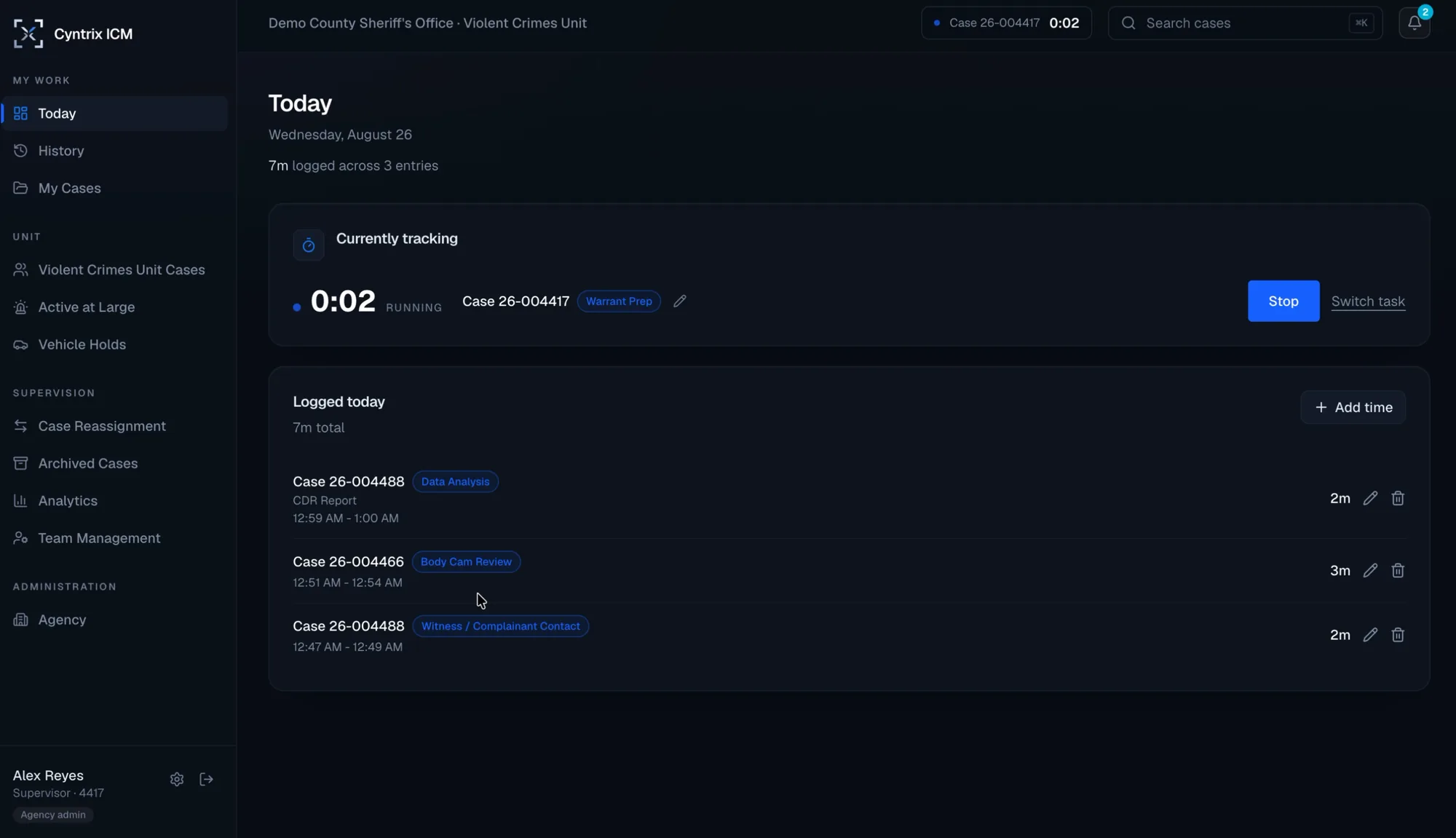
Every screenshot on this page is from a demo agency. The cases, people, and vehicles in them are invented.
Time
Time tracking that answers to command staff, not to the detective.
The point is not to watch anybody work. It is to answer the questions a unit currently cannot answer with evidence: where the hours actually go, why a burglary sat three weeks between moves, what a caseload really costs to carry. Those are the same numbers a grant application has to be built on, and the same ones behind a request for another position. Nobody can reconstruct them from memory in April for a budget due in May, so ICM captures them as the work happens.
- A timer started from any screen, tied to a case and a category
- Case work and everything else, counted separately
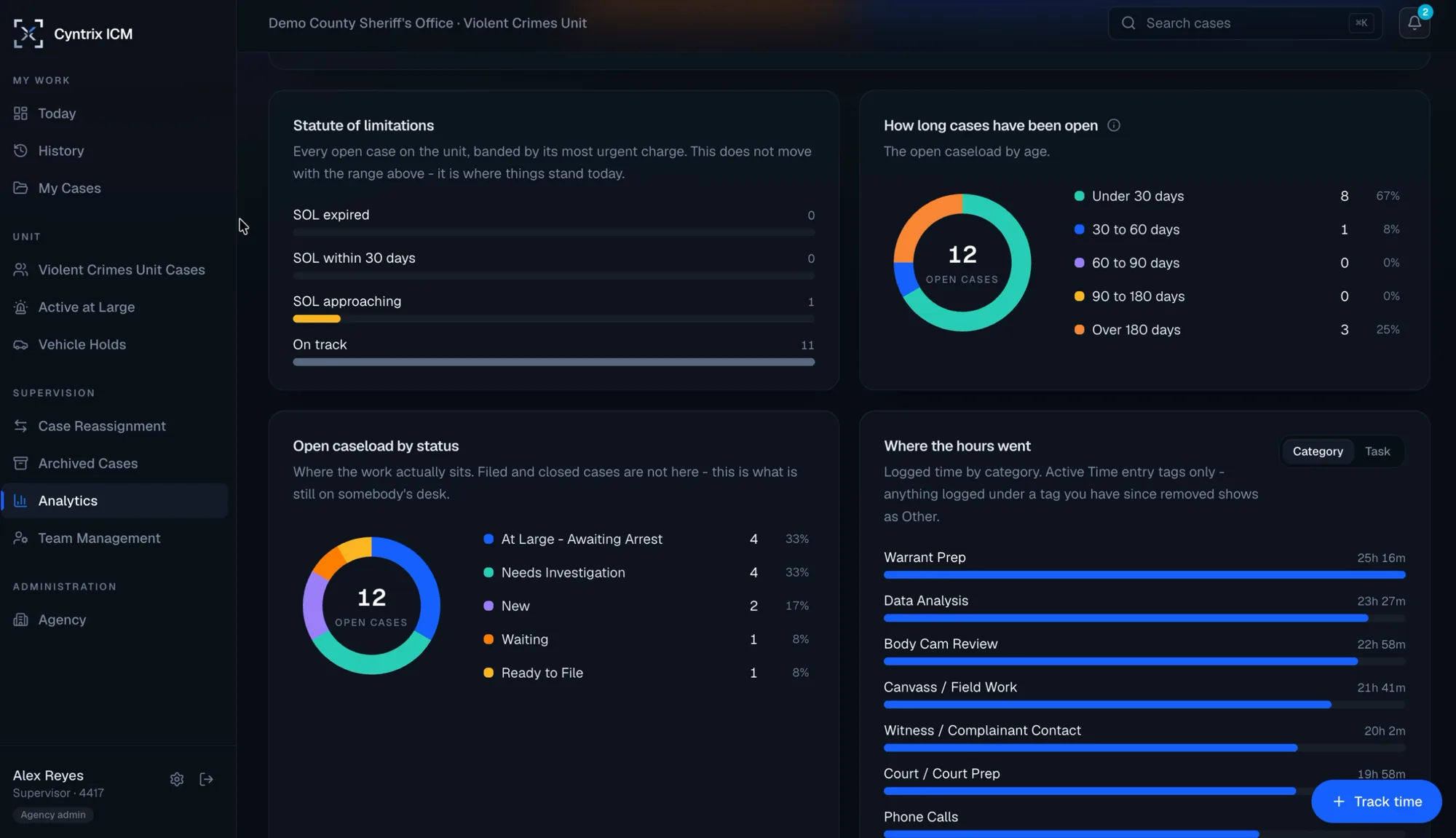
- Unit and per-detective totals over any date range
- Printable, and exportable as CSV for a budget packet
The caseload
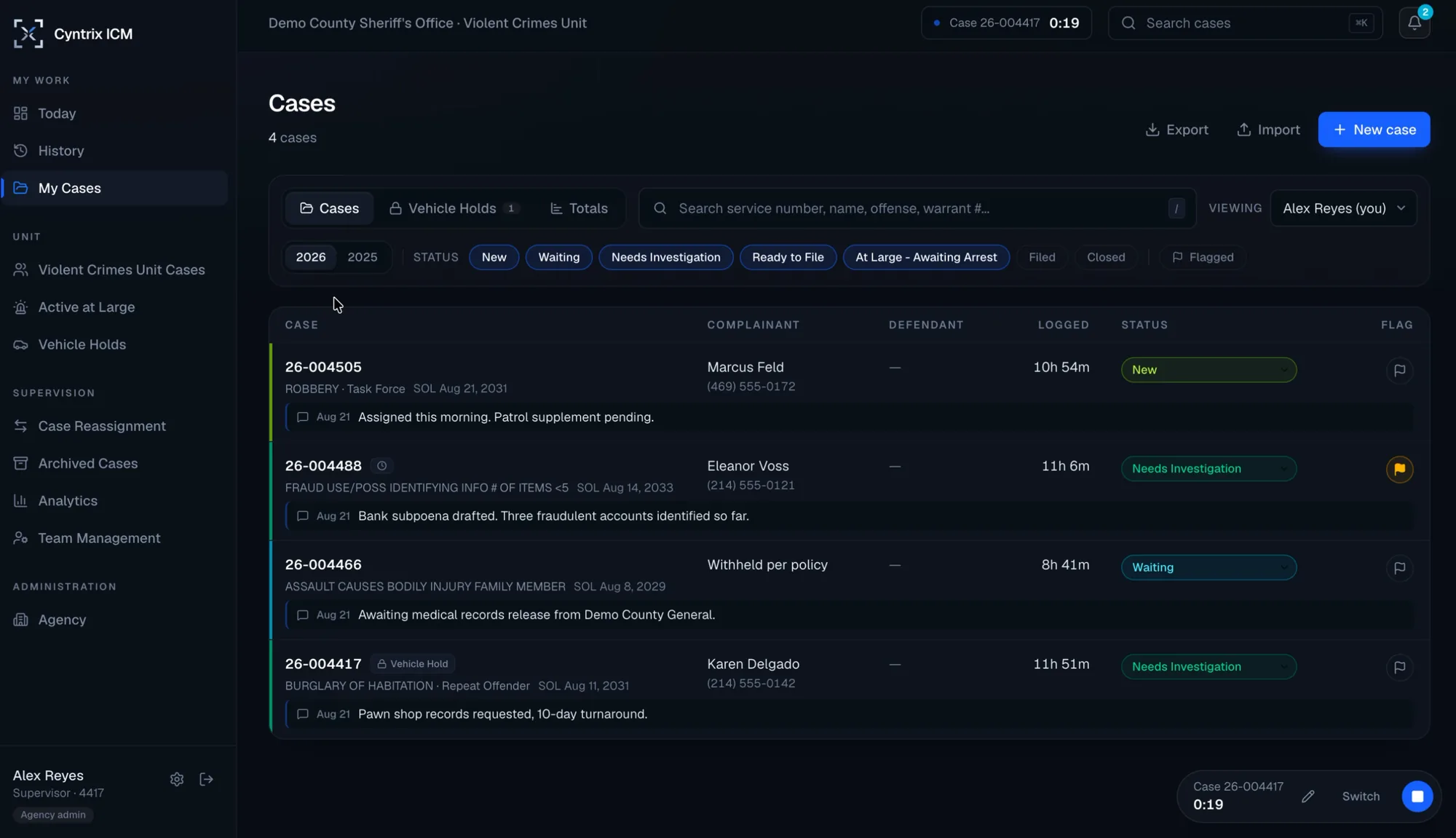
The whole caseload on one screen, colour coded by where it stands.
The spreadsheet this replaced had a status column people painted by hand. Here status is a field, filtering is a click, and every row carries the offense, the complainant, the hours logged against it, and how long is left on the clock. Search reaches service numbers, names, offenses, and warrant numbers at once.
- Seven statuses, from New through Filed and Closed
- Filter by status, year, owner, or flag
- The latest note previewed inline, so the list reads like a briefing
- Import the spreadsheet you already have, export back out any time
The case file
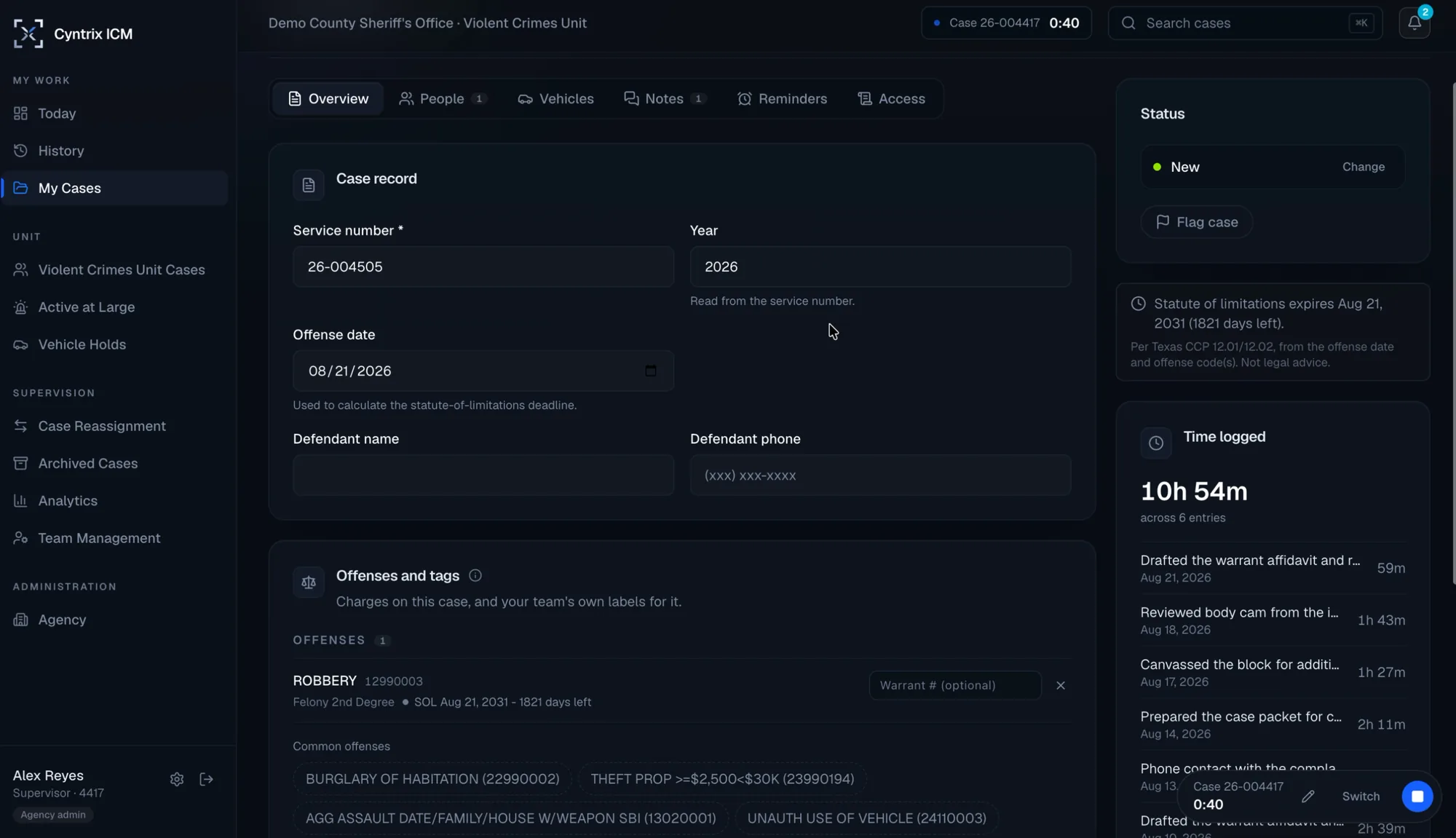
One record per case, and everything hangs off it.
Charges, complainants, suspects, related contacts, vehicles, private notes, unit notes, and personal reminders live on the case rather than in five different places. Promote a suspect to defendant and the list view and the At Large board update themselves.
- Charges picked from your state's own offense catalog, not typed free hand
- A private case log, separate from notes the whole unit can see
- A printable case sheet for court, discovery, or a case review
Deadlines
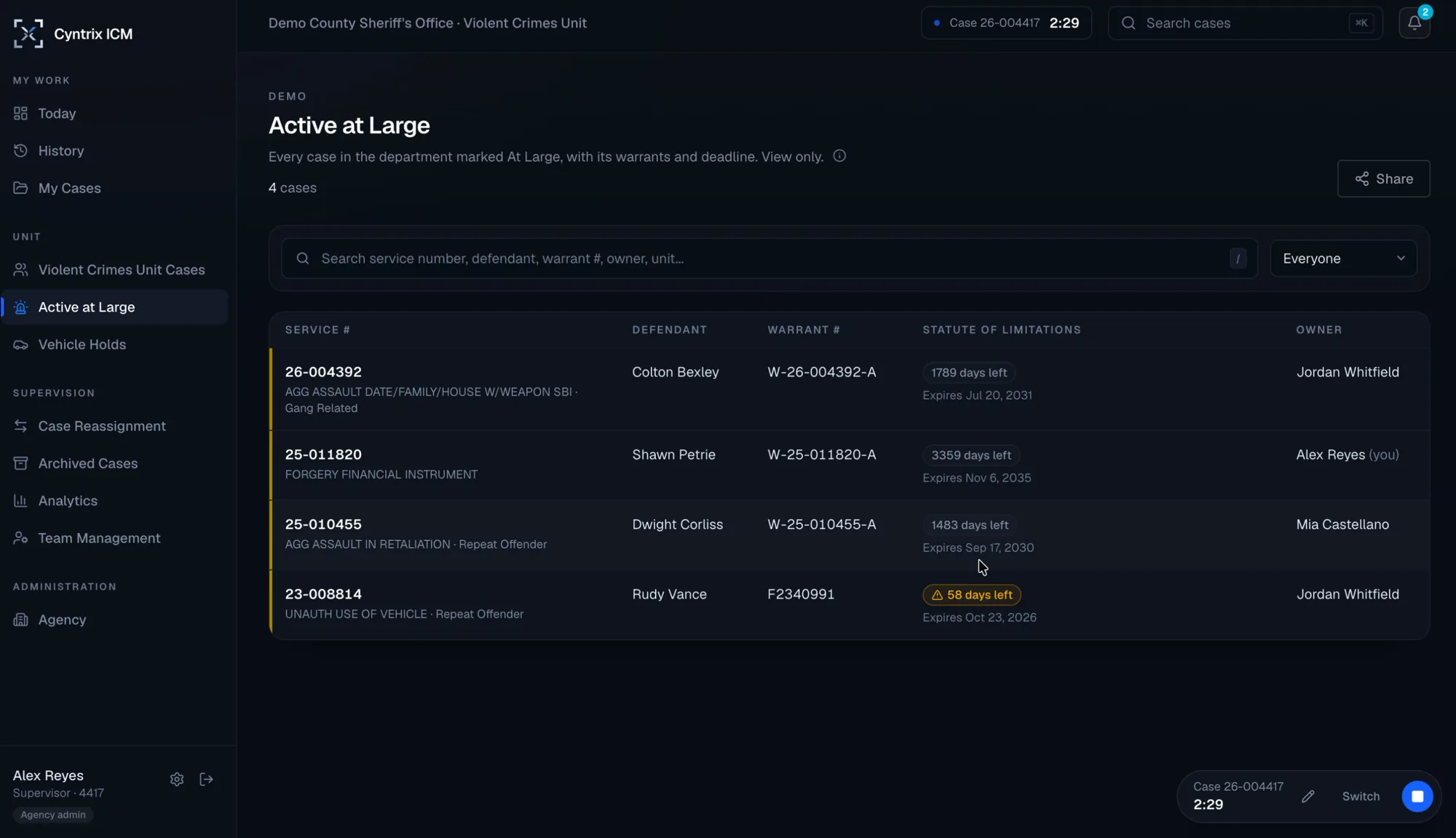
The limitation deadline is computed, per charge, from the day it happened.
Each charge carries its own limitation period under the governing statute, and the case shows the soonest of them. The classifier reads the statute and citation recorded on the offense itself rather than guessing from its name, which is what stops an abbreviation change from quietly reclassifying a charge. It is advisory, it shows its work, and it tells you to verify it.
- Per charge deadlines, with the case rail showing the nearest one
- An agency-wide At Large board with warrants and days remaining
- Alerts in the app as a deadline closes in
Also in it
Security
Built for material that has to be handled properly.
ICM holds investigative working material, so the security model was designed in rather than added on. It is not a CJIS authorization and we do not claim one: it is a documented, current account of how the system behaves, which is what an agency needs in order to make that call for itself.
Two factor on every account
Not optional and not a setting. Passkeys and authenticator apps, several per account, with self service recovery codes.
Access scoped to the unit
Every read of case material goes through one chokepoint that scopes it to the team and filters archived cases out.
No third party analytics
ICM URLs carry case identifiers, so there is deliberately no analytics script anywhere in the app.
Your data stays yours
Full CSV export of cases, people, vehicles, and time, in a shape that imports back. Leaving is a supported operation.
Pilot program
Not open yet. Get in line for when it is.
Cyntrix ICM is in private beta and is not accepting new agencies at the moment. When the next pilot group opens, the agencies on this list are the ones we contact first, they pay nothing for the first year, and what gets built next is a conversation with them rather than a roadmap handed down.
Cyntrix ICM is a product of CyntrixLabs LLC. The statute of limitations calculations it performs are advisory and are not legal advice. Nothing on this page is a claim of CJIS authorization, certification, or endorsement by any agency.